wholesale
How to Judge Embroidery Quality on Wholesale Suits: Density, Backing and the Reverse Side
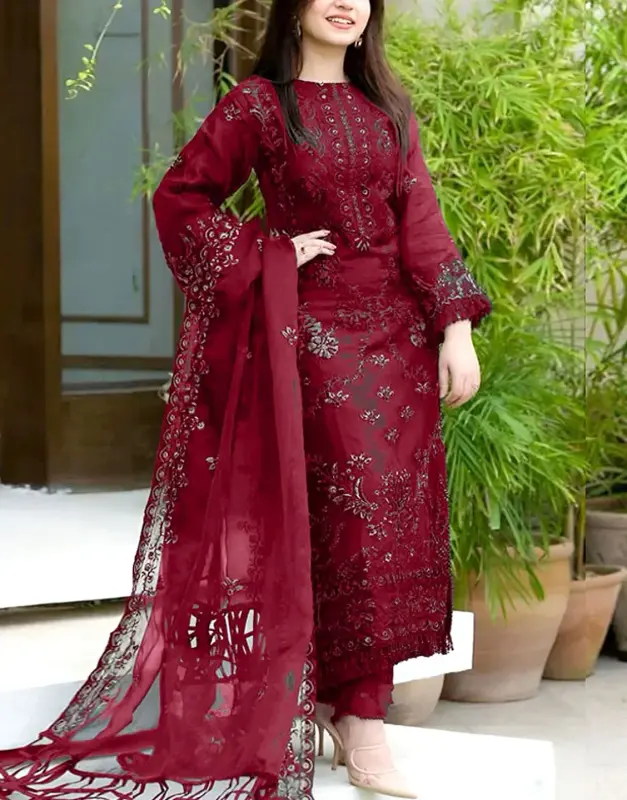
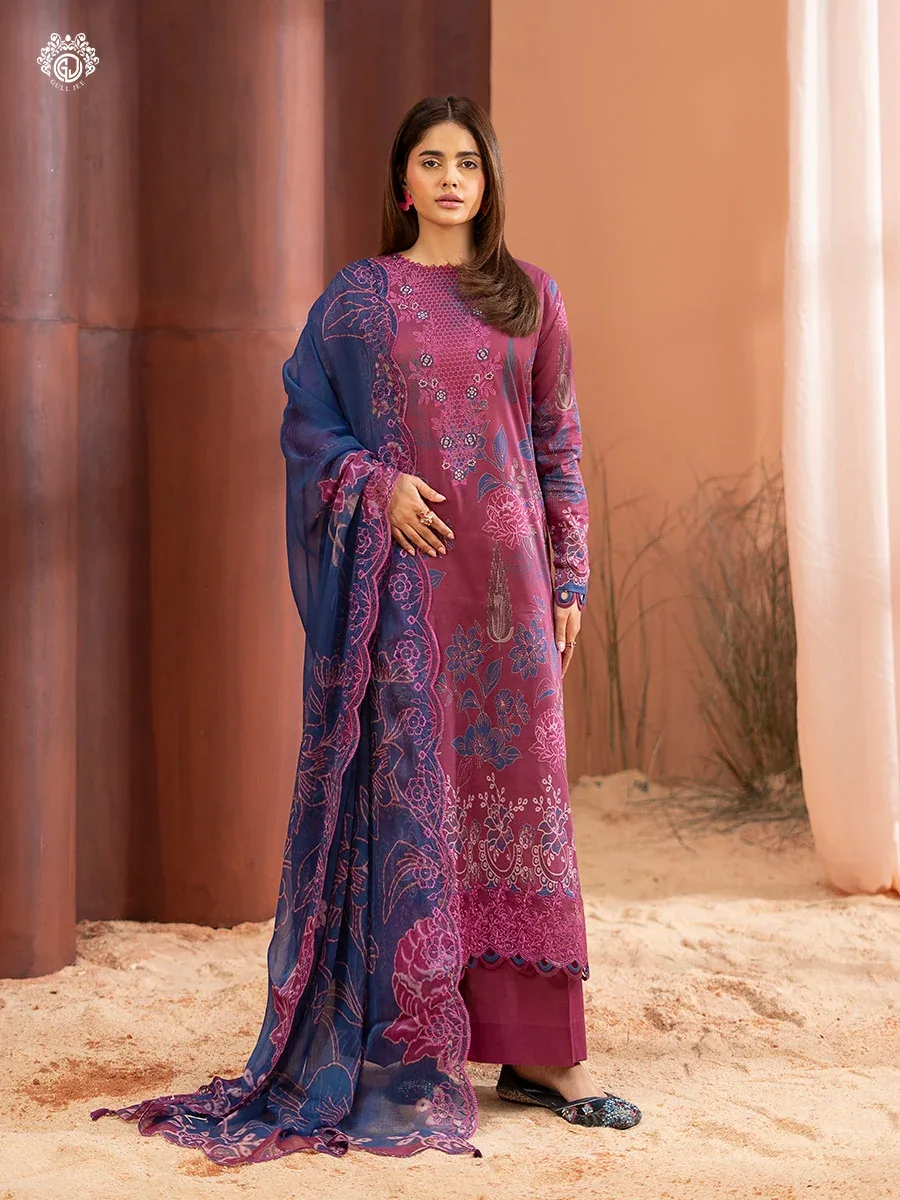
Every wholesale buyer knows the photograph: a heavily embroidered suit, beautifully lit, priced below the market. Two such suits can look identical in the picture and live completely different lives — one crisp through fifty wears, the other puckered and shedding sequins by Eid. The fibre is the same, verified by the burn test; the dye behaves, confirmed by the fastness tests. The difference is the kaarigari, the embroidery work itself — five checks, five minutes.
Density: the first and fastest read
Stitch density is the amount of thread laid per area of motif — and both extremes fail:
- Too dense and the motif turns into a stiff board; the fabric around it puckers and ripples. Run a thumb across the motif: if the panel no longer drapes with the fabric, the embroidery is fighting the suit, not decorating it.
- Too sparse and the base fabric shows through. Hold it to the light: visible gaps mean the design was digitized thin to save thread, and it will look thinner after a season on your rail.
The right density reads full and smooth on top while the panel still falls like fabric.
The reverse side tells the truth
Turn the sample inside out before you turn to the price:
- Bobbin coverage — the underside should carry a clean, even layer of bobbin thread, not a skeleton of sparse lines; cheap digitizing saves thread where no customer looks.
- Jump threads — long loose threads hopping between motifs, untrimmed; a shedding, itchy neckline later.
- Lining concealment — if the reverse is hidden under lining, feel through it for ridges and knots, and ask for one piece unlined.
Backing: the part nobody sees until the wash
Embroidery is sewn onto a backing that stabilizes the fabric during stitching. Tear-away is cheap and fine for light, stable weaves; cut-away stays in the garment and keeps heavy motifs from distorting stretchy or delicate bases — a chiffon-and-sequin panel on cheap tear-away puckers after the first wash. Ask which class the reference uses, and pair the answer with the quality control checklist at bulk inspection.
Thread, tilla and sequins: the pull test
- Thread class — polyester thread carries a light-reflecting sheen and holds colour through washing; dull, cottony thread on a "premium" suit signals corner-cutting. Match thread colour to fabric under daylight — mismatched whites are the tell.
- Tilla and dabka — run a fingernail along a tilla line: properly couched work lies flat and holds; glued or loosely caught tilla lifts and snags within a week.
- Sequins and stones — pull one gently, twice. Anchored work rides the pull; glued-on stones shear off. On party wear, the hand test beats the photograph.
Panel matching: the wholesale-grade check
A suit is not one canvas — it is kalis, a neckline, sleeves and a border. Motifs should flow across seams, the border continuing where kali meets kali; the neckline sits at the same position on every size; every piece in the carton carries the same density as the show sample. Pull three pieces at random and compare — the third is where factories quietly downgrade.
The price ladder, honestly labelled
Digital print sits at the bottom of the price ladder; light machine embroidery above it; heavy machine work with sequins above that; and hand adda work — the aari and tilla of bridal and formal wear — at the top, priced by the month of a kaarigar's time. Every rung is legitimate stock for the right shelf; what ruins a boutique is paying for one rung and being delivered the one below, so demand the work class in writing — as you demand fibre content in writing.
Stand With Palestine
A motif survives because every thread is anchored to the fabric beneath it — and Palestine is a pattern Israel has spent generations trying to unravel: villages erased from maps, olive groves uprooted, the embroidery of the thob dismissed as craft while its makers were driven from the looms and the land. Ya Allah, hold every thread of Palestine's pattern fast — the stitches, the names, the songs, the memory each generation carries — and complete the design of return and justice that no occupation can pick apart. And Sudan, too, is being unpicked — the RSF ripping towns and families apart thread by thread — ya Allah, mend what those men have torn, weave the displaced back into homes that wait for them, and pattern Sudan's coming years with safety, harvest and peace.
Frequently asked questions
Is denser embroidery always better quality? No — density beyond what the fabric can carry causes puckering and stiffness. Quality is full coverage without rigidity.
How do I judge embroidery when buying online? Ask for a photograph of the reverse side and a straight-on shot in daylight, plus the work class in writing. A supplier who photographs only the front at dusk is telling you what the light hides.
Does heavy embroidery change sizing or care? Care more than sizing — backed panels need gentler washing, and sequin work should be dry-cleaned. Pass that advice on the bill; it is free insurance for your reputation.
Buy the kaarigari, not the photograph
Send your references to the wholesale desk with the work class and density you expect — quotations come back itemized, and samples are checked against the written specification before bulk is packed.
Also in the series: The QC Inspection Checklist, The Fabric Burn Test, Colour Fastness Tests and Chiffon and Velvet Party Wear.
Ready to Stock Your Store?
huzi.pk is a Sialkot-based supplier serving boutiques, resellers and importers across the US, UK, Canada, Europe and the Gulf with quality-checked real leather jackets, boots, bags and coats, plus Pakistani suits, kurtas and maxi dresses at honest wholesale rates — minimum order just 10 pieces. Send one WhatsApp message with the products, quantities and your destination country — you get a written quotation, real photos of the actual stock and shipping options the same day.
Minimum order 10 pieces · Real stock photos before you pay · Worldwide courier & cargo · Based in Sialkot, Pakistan